You don’t need a designer budget to look like you have one. Some of the most put-together people you see — on the street, at work, scrolling past you on Instagram — are wearing pieces from the same mall stores and clearance racks everyone else shops at. The difference isn’t the price tag. It’s how they wear it.
Dressing expensive is less about what you buy and more about fit, fabric, color, and a handful of small details that most people overlook. Here are seven hacks that actually move the needle, without touching your savings.
1. Fit Beats Price Every Time
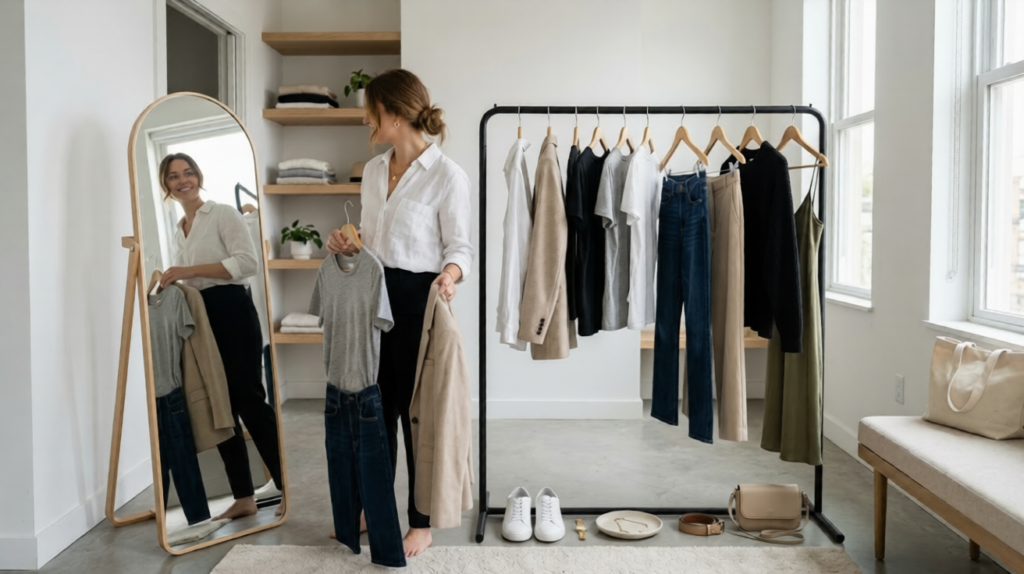
A ten-dollar top that fits your shoulders and skims your waist will always look better than a hundred-dollar piece that bunches, gaps, or hangs wrong. Fit is the single biggest giveaway of a “cheap” outfit — not the fabric, not the brand name.
Before you buy anything, check three spots: shoulders, waist, and hem length. If a blazer’s shoulder seams sit past your own shoulder line, or a dress hem hits at an awkward point on your leg, that’s the piece dragging your whole look down.
If something is close but not quite right, a local tailor can usually fix it for less than the cost of a fast-fashion top. Taking in a waist, shortening sleeves, or hemming trousers to break perfectly over your shoe can turn an off-the-rack find into something that looks made for you.
2. Stick to Neutral, Solid Colors
Busy prints and loud color-blocking tend to expose cheap fabric fast — the print is doing all the work because the material underneath can’t hold its own. Neutrals like black, camel, cream, navy, and grey photograph better, mix into more outfits, and hide the texture flaws that budget fabrics sometimes have.
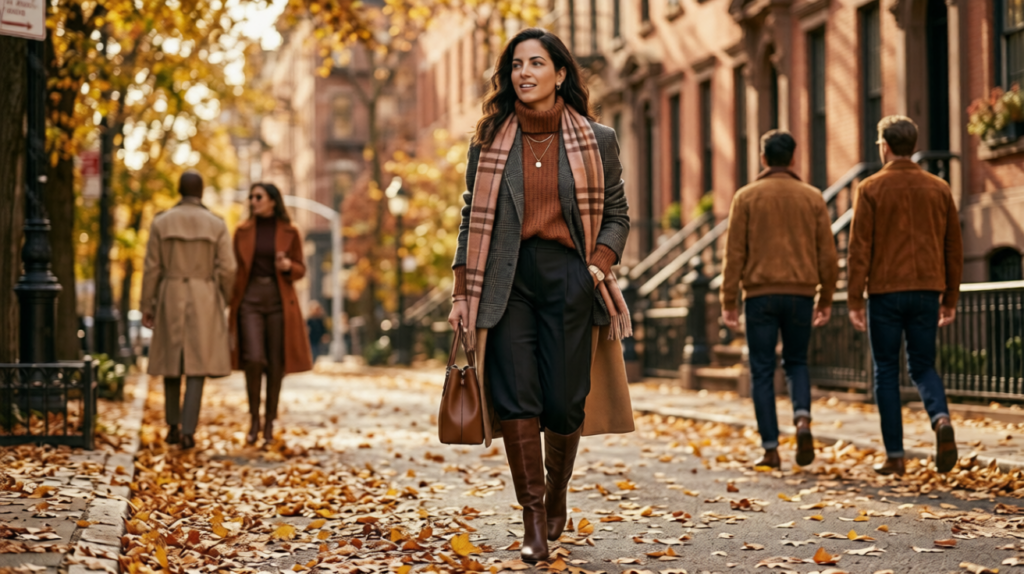
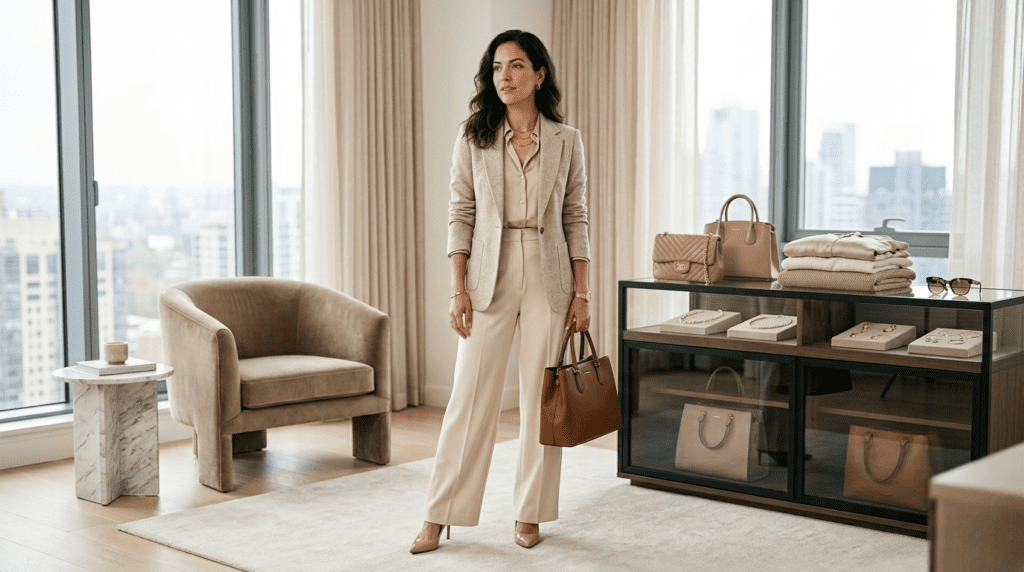
This doesn’t mean color is off-limits. It means save the bold prints for accessories or one statement piece, and let the rest of the outfit stay quiet. A monochrome or tonal outfit — same color family, different shades — reads as intentional and expensive almost automatically.
3. Invest in a Few Foundation Pieces
You don’t need a full new wardrobe. You need four or five pieces that do a lot of the heavy lifting:
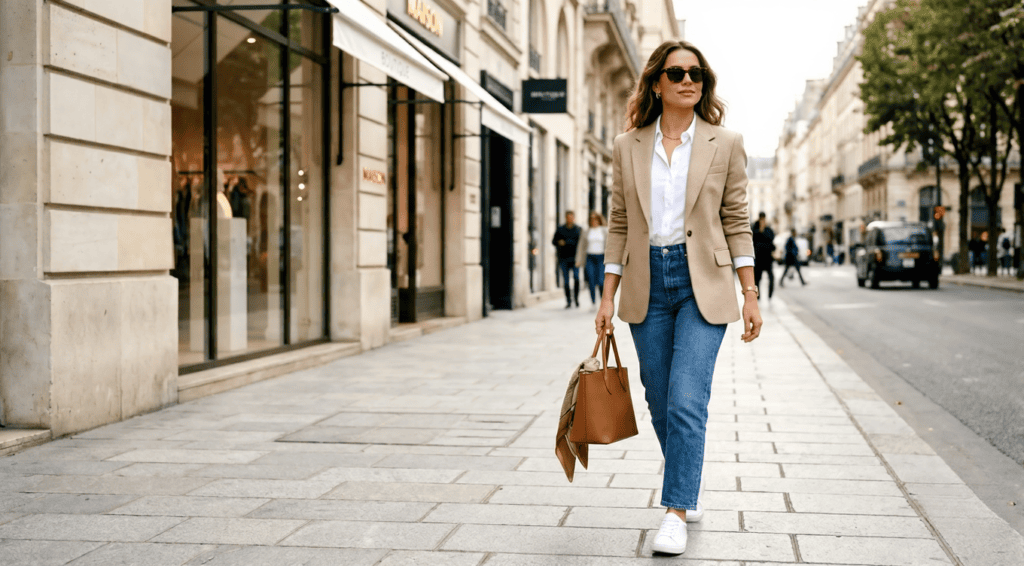
- A well-fitted blazer in black, navy, or camel
- Tailored trousers or a straight-leg pair of jeans
- A simple, structured handbag in a neutral shade
- A wool or wool-blend coat
- One good pair of shoes that isn’t obviously worn down
These are the pieces worth stretching your budget for, because they show up in outfit after outfit. Everything else — trend pieces, colorful tops, seasonal accessories — can come from wherever’s affordable.
4. Pay Attention to Small Details
Small details are what separate “put together” from “trying too hard.” A few worth checking before you wear anything out:
- Buttons: cheap plastic buttons on a blazer or coat are an instant tell. Swapping them for simple matte buttons in the same tone as the fabric is a five-minute fix that changes the whole piece.
- Tucking: a half-tuck on a loose top or shirt instantly looks more finished than letting it hang untucked and shapeless.
- Ironing and steaming: wrinkled clothing reads as cheap no matter what it cost. A quick steam before you leave the house does more for your outfit than most people realize.
- Shoe and bag condition: scuffed shoes or a worn handbag strap will undercut an otherwise great outfit faster than anything else.
5. Choose Accessories That Look Substantial
Accessories are where a lot of the “expensive” perception actually lives. A structured bag with clean lines, simple gold or silver jewelry (not too shiny, not too thin), and a good pair of sunglasses can elevate a basic outfit more than an expensive dress can save a sloppy one.
Skip anything that looks flimsy or overly trend-driven — dainty costume jewelry that tarnishes in a week, or a bag with visible glue lines, will work against you. One or two solid, simple accessory pieces beat a handful of cheap-looking ones.
6. Learn Basic Fabric Cues
You don’t need to be a textile expert, but a few quick checks help you avoid pieces that will look worn out fast:
- Scrunch the fabric in your hand — good material bounces back without deep wrinkles.
- Check the weight. Fabric that feels thin and see-through rarely photographs or drapes well.
- Look at the lining, if there is one. A lined skirt, blazer, or coat almost always looks and moves better than an unlined version.
Cotton blends, wool blends, and structured synthetics like ponte knit tend to hold their shape better than thin, unlined polyester, which is where a lot of budget pieces cut corners.
7. Take Care of What You Already Own
Looking expensive isn’t only about new purchases — it’s about maintenance. Clothes that are properly cared for last longer and keep their shape and color instead of fading, pilling, or stretching out.
A few habits that make a real difference: wash on gentle cycles, air-dry pieces that tend to shrink or lose shape in the dryer, use a fabric shaver on anything that’s started to pill, and get blazers or coats dry-cleaned occasionally instead of never. None of this costs much, and it’s the difference between a wardrobe that looks tired after three wears and one that still looks sharp after thirty.
Quick Comparison: Budget-Friendly Habits That Actually Work
| Hack | Cost | Impact | Effort |
|---|---|---|---|
| Tailoring / alterations | Low | High | Low |
| Neutral color palette | Free | High | Low |
| Foundation pieces (blazer, coat, bag) | Medium | High | One-time |
| Button/detail swaps | Very low | Medium | Low |
| Structured accessories | Low–Medium | Medium | Low |
| Fabric care & maintenance | Low | Medium | Ongoing |
Who This Approach Works Best For
This method suits anyone building or refreshing a wardrobe without a big budget — students, early-career professionals, or anyone who wants their outfits to look more polished without buying more clothes. It works especially well if you already own a mix of basics and just haven’t been styling or maintaining them with intention.
It’s less useful if you’re chasing a very specific luxury aesthetic tied to logos or recognizable designer silhouettes — no amount of styling substitutes for the actual item there. But for a generally polished, expensive-looking wardrobe, fit and fabric choices will get you most of the way.
Final Thought
Looking expensive was never really about the price on the tag. It’s about fit, color discipline, small details, and taking care of what you own. Once you start noticing those things, you’ll start seeing them — or their absence — in every outfit around you, on people wearing $20 pieces and $2,000 pieces alike.
FAQs
Can I really look expensive without buying designer clothes?
Yes. Fit, fabric quality, color coordination, and small finishing details matter far more to how “expensive” an outfit looks than the brand name on the label.
What’s the single biggest mistake that makes an outfit look cheap?
Poor fit. An ill-fitting piece, no matter how nice the fabric or color, is the fastest way to make an outfit look budget rather than polished.
Is it worth paying for tailoring on inexpensive clothes?
Often, yes. A basic hem or waist alteration usually costs less than the price difference between a budget piece and a premium one, and it solves the fit problem directly.
Do I need a lot of accessories to look put together?
No. One or two well-chosen, structured accessories usually do more than a handful of small, flimsy ones.
How often should I get clothes dry-cleaned to keep them looking new?
It depends on wear, but every two to four wears for dry-clean-only pieces is a reasonable rule of thumb, rather than after every single wear.