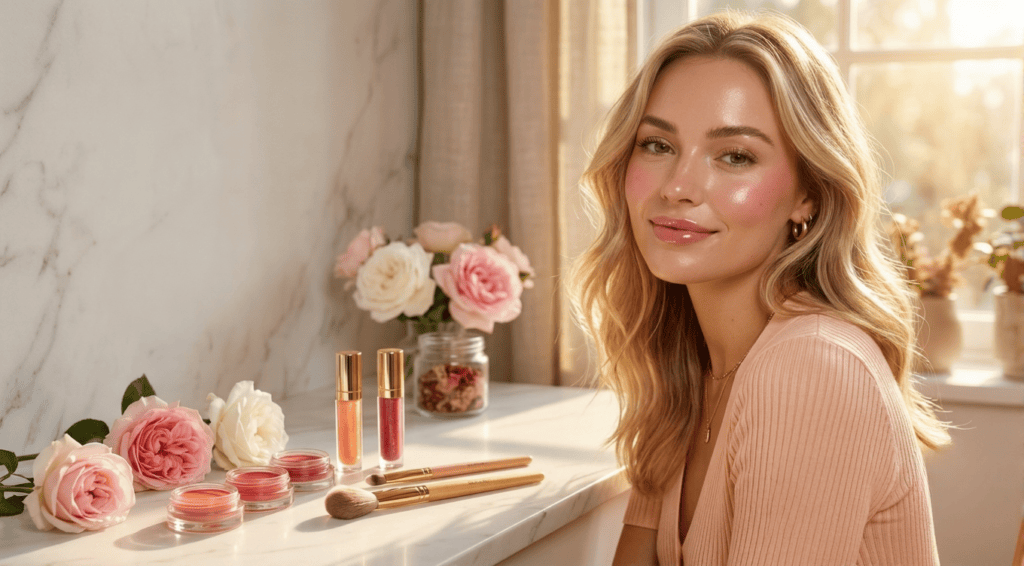
If your For You page has looked like one long highlight reel of glassy cheeks and glossy lips this year, you’re not imagining it. Jelly blush and lip oils have become the two products doing most of the heavy lifting behind that “just came back from the beach” glow, and honestly, they’re some of the easiest makeup products to use well.
There’s no contouring skill required. No blending timeline to master. You tap, you swipe, and the product does most of the work because of how the formula itself is built.
Here’s the thing though: jelly textures behave very differently from the cream and powder blushes most of us grew up with, and lip oils aren’t just fancy lip gloss. If you’ve tried either and felt like it looked patchy, faded too fast, or didn’t quite match the photos you saved, the formula and the application technique are usually the culprit, not you.
What Exactly Is Jelly Blush?
Jelly blush is a water-based or gel-based cheek tint with a bouncy, almost translucent texture, somewhere between a gummy candy and a chilled skincare gel. Press a finger into it and it springs back. That bounce is the whole point.
Unlike a cream blush, which is opaque and sits on the skin’s surface, jelly blush is sheer by nature. The color builds in translucent layers rather than covering the skin in one swipe, which is why it tends to look like your skin is flushed from the inside rather than “made up.”
Milk Makeup’s Cooling Water Jelly Tint helped put this texture on the map, and it’s now sold every 20 seconds according to the brand, largely because it delivers a non-comedogenic, long-lasting jelly blush and lip stain with a hydrating, bouncy texture that glides on for a sheer, buildable burst of color. Reviewers do warn that the window for blending is short. As one beauty editor put it, you get mere seconds to blend it out before it sets once it touches your skin, which is the single most important thing to know before you try one.
Other jelly formulas worth knowing about include LAMEL’s Water Jelly Blush, which is infused with hyaluronic acid and vitamin B5 and lasts up to 8 hours, and drugstore-friendly sticks from brands like Revolution and KIMUSE that lean into the same watery, multi-use format for lips, cheeks, and even eyelids.
Jelly Blush vs. Cream Blush vs. Powder Blush
| Formula | Finish | Best For | Blending Time |
|---|---|---|---|
| Jelly/Water Blush | Sheer, glassy, dewy | Warm weather, natural flush | Very short (seconds) |
| Cream Blush | Soft, buildable satin | Everyday wear, mature skin | Moderate |
| Powder Blush | Matte to satin, longer wear | Oily skin, all-day hold | Long |
If your skin runs oily, jelly blush can still work, but you’ll want to set it lightly with a translucent powder once it’s dry, otherwise it can shift by midafternoon.
Why Lip Oils Took Over
Lip oils solved a problem lip gloss never quite fixed: shine without the tackiness. As one roundup of this year’s top formulas explains, the fastest-growing subcategory in lip products is the balm-oil-gloss hybrid, which combines the nourishing weight of a balm, the skincare actives of an oil, and the shine of a traditional gloss.
That hybrid approach is why lip oils feel so different from the sticky glosses a lot of us stopped wearing years ago. Non-sticky formulas have improved dramatically compared to a few years ago, and silicone-blended glosses tend to stay non-sticky longer, while some pure oil-based formulas can turn tacky in warm weather, so if you live somewhere hot and humid, check the ingredient list before you commit to a bottle.
Dior remains the name most people associate with the category. The brand reformulated its cult Lip Glow Oil this year, and per public brand reporting, it now uses a cherry-oil base with three finishes, Juicy, Sparkly, and Glaze, across sixteen pH-activated shades. That pH-reactive quality means the same formula turns a slightly different shade on everyone, which is part of why it’s stayed popular since it first launched.
If Dior’s price point is a stretch, you’re not short on alternatives. Rare Beauty’s Soft Pinch Tinted Lip Oil has become something of a consensus pick among reviewers for offering strong pigment and hydration at a fraction of the cost, while Rhode’s Peptide Lip Tint leans more into long-term lip treatment than immediate color payoff. Summer Fridays sits slightly outside the lip oil category technically, since it’s a butter balm built on shea and murumuru rather than an oil base, but it layers beautifully under or over a lip oil if you want extra cushion.
How to Layer Jelly Blush and Lip Oil for the Dewy Look
The order you apply these products in changes the whole effect, so don’t just wing it.
Start with hydrated skin. Jelly textures grip better on skin that isn’t dry or over-powdered. A lightweight moisturizer or hydrating serum underneath makes a real difference to how evenly the blush sits.
Apply jelly blush before your base makeup fully sets, or right after. Dot small amounts high on the cheekbones with clean fingertips and blend immediately, since the working window is short. If you’re using a brush instead, dampen it slightly first so it doesn’t drag or streak the gel.
Build in thin layers rather than one heavy swipe. Because jelly blush is translucent by design, one layer often reads as barely-there. That’s fine if that’s the look you want, but if you’re after more visible color, wait a few seconds for the first layer to tack down, then add a second.
Save lip oil for last. Apply it directly from the wand, or dab it on with a fingertip for a more diffused, bitten-lip effect. If you want more pigment payoff, pat a small amount onto the center of your lips first and blend outward, rather than swiping edge to edge.
Skip heavy setting powder on the cheeks. A blurring, matte-finish powder will fight the entire point of jelly blush. If you need staying power, a light mist of setting spray over the whole face works better than powder directly on top of the blush.
Who This Combination Works Best For
Jelly blush and lip oil suit almost every skin type, but they show up differently depending on your starting canvas.
Dry or normal skin gets the most seamless result, since the jelly texture melts into the skin rather than sitting on top of dry patches.
Oily skin can absolutely wear this look, just expect to touch up the blush by early afternoon, and lean on blotting rather than powder if shine gets too intense.
Mature skin often looks better with jelly blush than with heavier cream formulas, since the sheer color doesn’t settle into fine lines the way opaque products can. A tinted lip oil with a peptide or hyaluronic acid base adds a plumping effect that’s genuinely flattering here too.
Common Mistakes to Avoid
Applying jelly blush too low on the cheek is one of the most frequent errors. Because the color is sheer, placement matters more than it does with pigmented powder blush. Keep it high, near the top of the cheekbone, for a lifted rather than droopy effect.
Overworking the blend is another one. Once jelly blush starts to tack, going back over it with more product or more blending motion just drags color around unevenly. If it’s not where you want it, a damp sponge can help fix small mistakes before the formula fully sets.
With lip oil, the biggest misstep is skipping exfoliation. Oil formulas cling to flaky patches instead of smoothing over them, so a quick lip scrub the night before makes the finish look noticeably better the next day.
Frequently Asked Questions
Does jelly blush work on oily skin?
Yes, though it may need a touch-up by midafternoon. Set it with a light dusting of translucent powder around the edges rather than directly on top, to preserve the dewy finish while controlling shine elsewhere.
Can I wear jelly blush and lip oil without any other makeup?
Absolutely. This combination was practically built for a no-makeup makeup day. A tinted moisturizer or light SPF underneath is usually all you need to complete the look.
How long does jelly blush actually last?
It varies by brand, but most formulas last six to eight hours before needing a refresh, similar to a long-wear stain. Water-based versions with hyaluronic acid tend to hold color slightly longer than pure gel formulas.
Are lip oils safe for sensitive lips?
Most are, but fragrance is the most common irritant in this category. Formulas marketed as fragrance-free or dermatologist-tested are the safer bet if you’ve had reactions to lip products before, and it’s worth patch-testing a new one on your inner arm first.
What’s the difference between a lip oil and a lip gloss?
Lip oils are built around actual nourishing oils, like jojoba, rosehip, or cherry oil, as the base ingredient, with shine as a secondary effect. Lip glosses prioritize shine and often color payoff first, with hydration playing a smaller role.
Final Thought
The whole appeal of jelly blush and lip oil is that they don’t ask much of you. No blending skills, no ten-step routine, just a tap and a swipe and skin that looks alive instead of “done.” Pick one formula that plays nice with your skin type, get the placement right, and this becomes a five-minute part of your routine instead of a whole production. That’s really the point of a dewy summer look anyway, it should feel effortless, not high-maintenance.