Your foundation is supposed to sit on your skin, not do anything for it. That used to be the deal. You put on skincare in the morning, waited for it to sink in, then layered makeup over the top as a separate, purely cosmetic step.
That line has mostly disappeared. Walk through any beauty aisle right now and half the foundations, tints, and concealers on the shelf are also trying to treat your skin while they cover it. That’s hybrid makeup, and it’s not a passing trend, it’s how most complexion products are being formulated going forward.
Hybrid Makeup, Defined
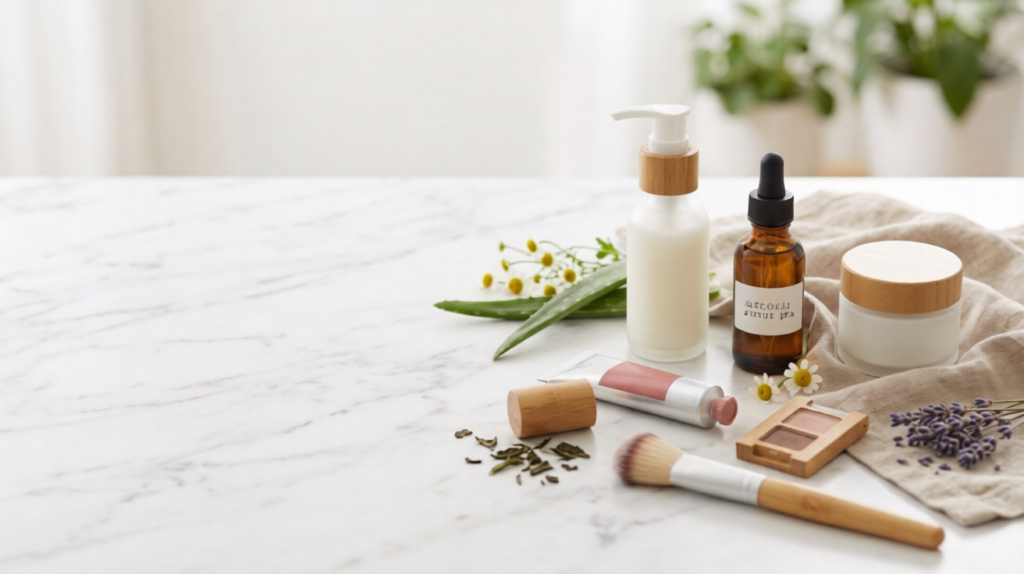
Hybrid makeup is color cosmetics formulated with active skincare ingredients that do something beyond sit on the surface. Think niacinamide in a tinted moisturizer, hyaluronic acid in a concealer, peptides in a serum foundation, or SPF built into a blush.
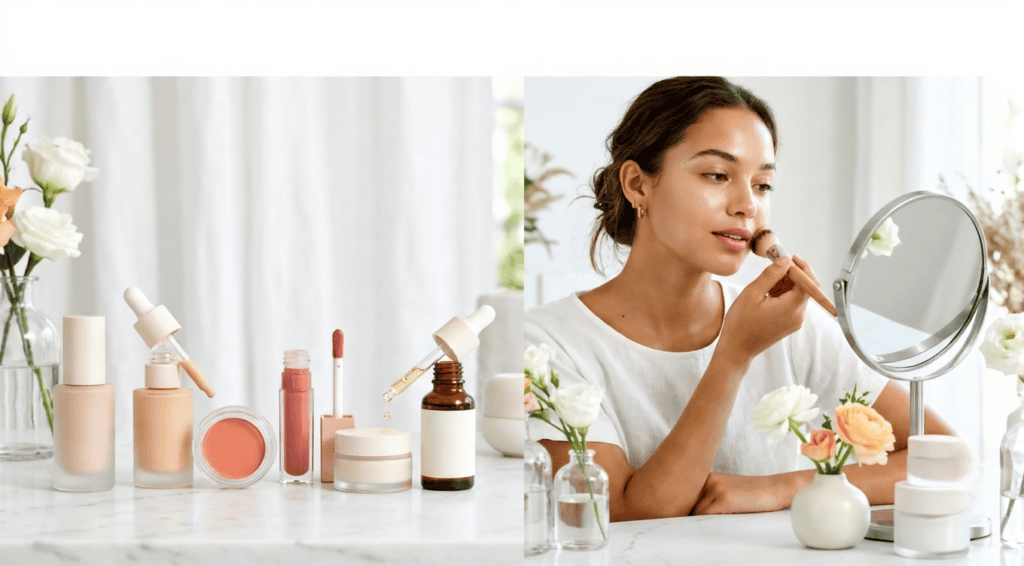
The idea is simple: instead of choosing between makeup and skincare, you get a product that works as both at once. A serum foundation, for example, is meant to hydrate and support your skin barrier over weeks of use, not just blur pores for eight hours.
This isn’t the same as a foundation that just claims to be “moisturizing” because it contains glycerin. Real hybrid formulas carry actives at concentrations meant to produce a visible change in your skin over time, alongside the coverage.
Why This Shift Happened Now
A few things converged to make hybrid formulas the default rather than a niche category.
Dermatologists have spent years pushing daily SPF, which meant most people were already applying sunscreen before makeup. Layering a separate tinted product with its own SPF on top felt redundant, so brands merged the two.
At the same time, younger buyers pulled away from heavy, full-coverage bases in favor of a more natural “your skin but better” look. That shift favored lighter, serum-like textures that could plausibly double as skincare.
Add to that a broader “skinification” movement across beauty, where skincare-infused makeup grew out of minimalism trends and a push to simplify routines that had gotten overloaded with too many single-purpose products. Consumers didn’t want to give up either coverage or skin health, so brands started building both into one product.
What’s Actually Inside a Hybrid Formula
Not every ingredient list is created equal. Here’s what tends to show up in genuine hybrid products, and what it’s doing there.
| Ingredient | What it’s for | Where you’ll find it |
|---|---|---|
| Niacinamide | Calms redness, refines the look of pores, brightens over time | Tinted moisturizers, concealers, serum foundations |
| Hyaluronic acid | Pulls in and holds moisture, plumps fine lines | Nearly every hybrid base product |
| Peptides | Supports firmness and skin texture with regular use | Higher-end serum foundations, lip treatments |
| Ceramides | Reinforces the skin barrier | Cream foundations, balm tints |
| SPF (mineral or chemical) | Daily sun protection built into the base step | Tinted SPFs, skin tints, some blushes |
| Squalane and plant oils | Nourishes and softens without heaviness | Lightweight tints, lip and cheek products |
A useful gut check before buying: if a product just lists water and glycerin near the top with an active buried at the very end, it’s likely a marketing claim rather than a working formula. Effective niacinamide is generally used around 5% or higher, and it takes weeks of consistent use to notice a difference in oil control or tone.
Hybrid Makeup vs. Regular Makeup
The two categories overlap in what they look like on shelf, but they’re built for different jobs.
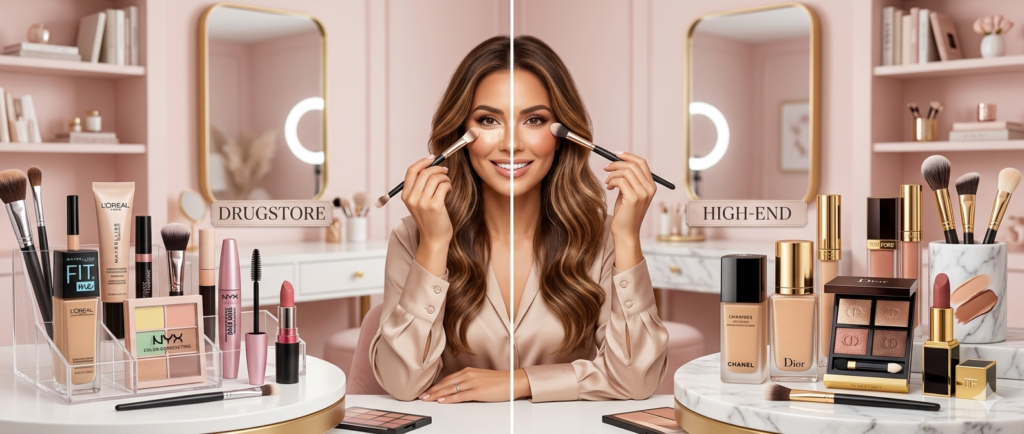
Regular makeup exists to change your appearance for the hours you’re wearing it. It doesn’t need to do anything after you take it off. Hybrid makeup is designed to still be working on your skin at the end of the day, and ideally, after weeks of use.
That also changes how you should think about value. A $45 tinted serum that replaces your moisturizer, SPF, and light coverage is doing the job of three products, so the price comparison isn’t foundation-to-foundation, it’s foundation-to-your-whole-morning-routine.
Who Should Actually Use Hybrid Makeup
Hybrid formulas make the most sense for people who already keep their routine simple, or want to. If your mornings involve cleanser, a serum or two, moisturizer, and then makeup, folding an active into your base step cuts out a layer without cutting corners.
They’re also worth it if you have a specific concern, since you can match the active to it. Oily or acne-prone skin tends to do well with niacinamide-based tints. Dry or mature skin benefits more from hyaluronic acid and peptide formulas. Uneven tone and post-breakout marks respond better to niacinamide or gentle brightening actives over time.
Full-glam, heavy-coverage days are the one place hybrid formulas usually fall short. Most are built to be light and skin-like, so if you need serious color correction or all-day full coverage for photos, a traditional heavy foundation applied over your regular skincare will still outperform a hybrid tint.
How to Read a Label Before You Buy
Coverage and finish matter, but check three things first.
Look for the active listed in the first half of the ingredient list, not buried near the preservatives. Check the concentration if the brand publishes it, since low doses of niacinamide or hyaluronic acid won’t do much. And give it time. Hydration from hyaluronic acid can show within two to four weeks, while oil control from niacinamide and texture changes from peptides tend to take six to eight weeks to become noticeable.
Frequently Asked Questions
Is hybrid makeup the same as tinted moisturizer?
Tinted moisturizer is one type of hybrid product. Hybrid makeup is the broader category, which also includes serum foundations, treatment concealers, SPF blushes, and lip products with active ingredients.
Does hybrid makeup actually improve skin, or is it just marketing?
It depends on the concentration of active ingredients. Formulas with niacinamide, hyaluronic acid, or peptides at effective levels can genuinely improve hydration, tone, and texture over several weeks. Products that just list actives in trace amounts mostly offer the marketing benefit without the skin benefit.
Can I use hybrid makeup instead of my regular skincare?
It can replace a step or two, like your daily moisturizer or SPF, but it shouldn’t replace your full routine. Cleansing, treatment serums like retinol, and a proper moisturizer at night still matter.
Which skin types benefit most from hybrid formulas?
Combination and normal skin adapt to hybrid formulas most easily. Oily skin does well with lightweight, niacinamide-forward options, while dry and mature skin should look for hyaluronic acid and peptide-rich formulas with more emollience.
Is hybrid makeup more expensive than regular makeup?
Often, yes, per bottle. But since one product is doing the work of two or three steps, the cost per function is usually comparable to, or lower than, buying separate skincare and makeup.
Final Thought
Hybrid makeup isn’t really about a new product category, it’s about how people want their routines to work now. Fewer steps, less waste, and products that pull double duty without pretending to be something they’re not.
If you’re going to make the switch, don’t chase the trend blindly. Check the ingredient list, match the active to what your skin actually needs, and give the product a few weeks before judging it. Do that, and hybrid makeup earns its spot in your routine instead of just sitting on top of it.