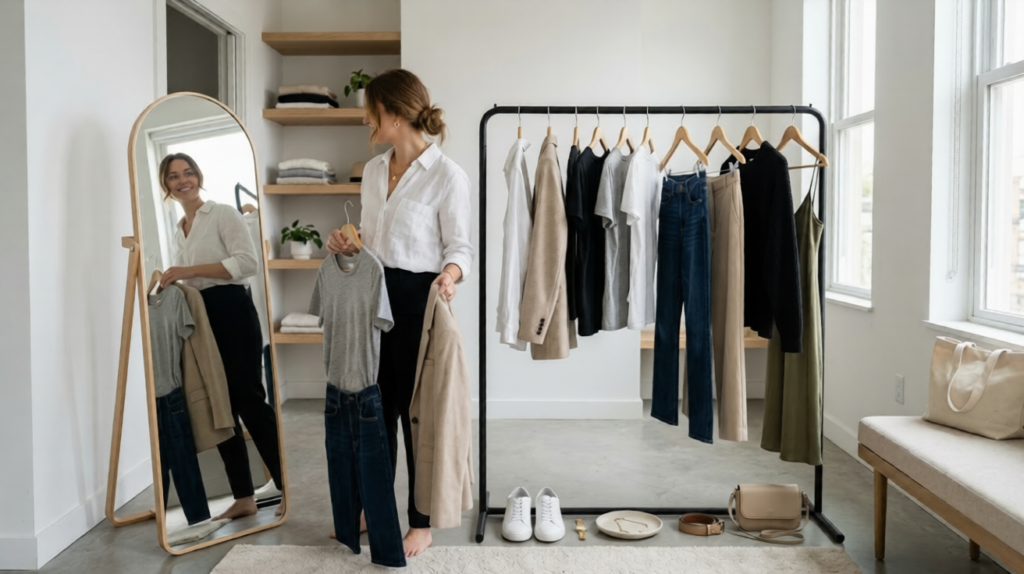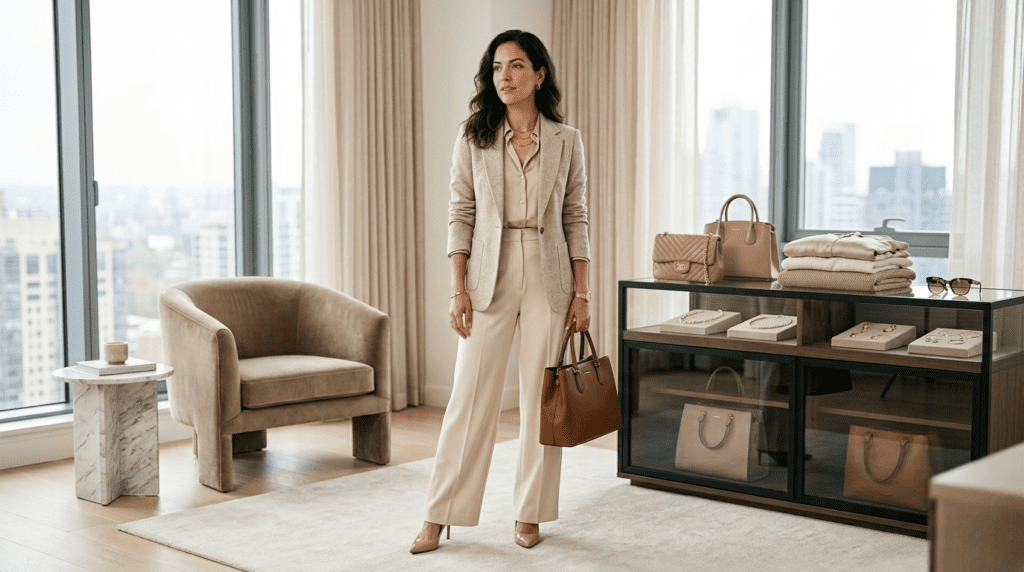

There was a time when dressing well meant dressing in labels, head to toe, no exceptions. That era is quietly over. Walk through any street style gallery this year and you’ll notice something: the most photographed outfits aren’t the most expensive ones. They’re the smartest ones.
That’s high-low styling — the practice of pairing one or two investment pieces with affordable, everyday basics. Done right, it doesn’t look like a compromise. It looks like taste.
This guide breaks down how the mix actually works, which pieces deserve the splurge, and how to avoid the outfit looking like two different budgets fighting for attention.
What High-Low Styling Actually Means
High-low styling isn’t about throwing a designer bag over a random outfit and hoping for the best. It’s a deliberate ratio: one hero piece, everything else quiet.
Stylist Meg Gallagher, who works with high-low dressing regularly, describes affordable basics as the canvas that lets a luxury piece do the talking. The basics aren’t filler. They’re the setup for the one thing you actually want people to notice.
Think of an outfit like a sentence. If every word is shouting, nothing lands. High-low styling picks one word to emphasize and lets the rest of the sentence support it.
Why This Approach Works Better Than Full Designer Dressing
Full designer, head-to-toe, can go one of two ways. Worn with a strong color story or a clear silhouette idea, it reads as intentional. Worn as a display of logos, it starts to feel like a costume — like the outfit is doing the talking instead of the person wearing it.
High-low sidesteps that problem entirely. When only one piece is expensive, there’s no competition for attention. The eye goes exactly where you want it to go, and the rest of the outfit gets to feel effortless instead of try-hard.
There’s also a practical argument for it. A well-made blazer worn twice a week for three years works out to just a couple of dollars per wear. A trend piece worn once before it falls apart costs you the full price tag for a single outing. High-low styling isn’t just about looking put-together — it’s about spending where it actually pays off.
The One-Hero Rule
This is the rule almost every experienced stylist comes back to: pick one piece to be the investment, and let everything else stay simple.
If your bag is the splurge, wear it with jeans and a plain tee. If your coat is doing the heavy lifting, keep the shoes and accessories minimal. The moment you add a second “loud” piece, the outfit stops reading as curated and starts reading as cluttered.
A good way to test it: look in the mirror and ask which piece you’d want a stranger to notice first. If you can’t answer in under three seconds, you probably have two hero pieces competing, and one of them needs to step back.
What Makes a Good Investment Piece
Not everything deserves the splurge. The pieces worth spending on are the ones you’ll wear constantly and that hold their shape over time:
- A well-cut coat or blazer
- A structured handbag
- Leather boots or a classic loafer
- Fine jewelry you’ll never take off
- A tailored pair of trousers
These are the pieces that get worn hundreds of times a year. The cost per wear drops fast, and quality tailoring or leather actually improves with age instead of falling apart.
What to Keep Affordable
Some categories are better left budget-friendly, especially anything tied to a trend cycle:
- Statement prints or seasonal colors
- Trend-driven accessories (think a specific bag shape or embellishment having a moment)
- Basics that get heavy wear and tear — plain tees, everyday denim
- Anything you’re testing out before committing long-term
If a trend catches on and you find yourself reaching for it constantly, that’s the signal to eventually upgrade it. Until then, there’s no reason to spend designer money on something that might feel dated in a year.
Comparison Table: Where to Splurge vs. Where to Save
| Category | Splurge Worth It? | Why |
|---|---|---|
| Coats & blazers | Yes | Worn constantly, holds shape for years, visible fabric quality |
| Handbags | Yes | High resale value, best cost-per-wear of any category |
| Leather shoes/boots | Yes | Comfort and durability improve with quality construction |
| Fine jewelry | Yes | Worn daily, timeless, rarely goes out of style |
| Basic tees & tanks | No | High wear and tear, easy to replace, quality gap is minor |
| Trend pieces | No | Short lifespan, better to test cheap before committing |
| Everyday denim | Depends | Worth it only if fit and durability genuinely differ |
| Seasonal accessories | No | Tied to a specific trend cycle, loses relevance fast |
Techniques Stylists Actually Use
Contrast the Textures, Not Just the Price
Pairing a silk or cashmere piece with denim or plain cotton creates visual interest that has nothing to do with cost. A cashmere sweater over a fast-fashion pleated skirt works because the textures play off each other — soft against structured, warm against cool. The eye is busy processing the contrast, not calculating price tags.
Let One Accessory Carry the Look
A classic bag or a pair of good sunglasses can lend its quality to everything around it. This works because accessories tend to have the best resale value and hold up the longest, so investing there stretches further than investing in clothing that wears out.
Try Monochrome Dressing
Wearing an affordable outfit in a single tonal palette — all cream, all black, all camel — makes the pieces read as considered rather than cheap. Add texture variation within that single color (a matte top, a slightly glossy trouser) and the whole look gains depth without adding cost.
Swap Small Details
Something as minor as replacing plastic buttons on an affordable coat with metal or horn ones changes how the whole piece reads up close. It’s a small fix, but it removes the one detail that usually gives a budget item away.
Common Mistakes to Avoid
Wearing two hero pieces at once. A designer bag and a designer belt and statement shoes turns into visual noise. Pick one.
Ignoring fit. An affordable blazer that fits your shoulders correctly will always look better than an expensive one that doesn’t. Fit matters more than the label on almost every piece.
Buying trend pieces at full designer price. If something is popular for one season and gone the next, there’s little reason to pay a premium for it.
Skipping the shopping-around step. Off-season sales, designer resale sites, and outlet retailers often carry the exact investment pieces you’re after at a real discount. Paying full retail on day one isn’t required to build a high-low wardrobe.
Building Your High-Low Wardrobe Over Time
You don’t need to buy your investment pieces all at once. Start with the basics — good denim, simple tees, a few neutral layers — and add one investment piece at a time as budget allows. A coat this season, a bag next season, boots after that.
This also solves the trend problem. Test new trends in affordable versions first. If a shape or style sticks around in your rotation for a year or more, that’s your cue it’s worth the upgrade. If it fades, you haven’t lost much.
Final Thought
High-low styling isn’t a budgeting trick dressed up as a trend — it’s how a lot of genuinely well-dressed people have always shopped. The goal was never to hide what’s affordable. It’s to be deliberate about where the money goes, so the one piece that matters gets to stand out instead of getting lost in a sea of labels.
Frequently Asked Questions
What is high-low styling in fashion?
High-low styling means pairing one or two investment pieces, like a designer bag or a tailored coat, with affordable basics. The mix creates a balanced look instead of an outfit that reads as either budget or over-the-top luxury.
Does high-low styling actually look expensive, or does it look cheap?
Done correctly, it looks intentional. The trick is contrast and restraint — one hero piece, simple supporting pieces, and good fit throughout. Mixing too many statement items at once is what makes an outfit feel disjointed.
Which pieces are worth investing in first?
Coats, structured handbags, leather shoes, and fine jewelry tend to offer the best long-term value because they’re worn constantly and hold their quality over years, unlike trend-driven items.
Can high-low styling work with fast-fashion brands only?
Yes, temporarily. Many people test a look entirely in affordable pieces first, then upgrade the one item they reach for most. It’s a practical way to figure out what’s actually worth the investment.
How do I keep an affordable piece from looking cheap next to a luxury item?
Fit is the biggest factor, followed by fabric care. A well-fitted, well-maintained affordable piece next to a quality item usually reads fine. Small upgrades, like swapping buttons or steaming out wrinkles, also help close the gap.