
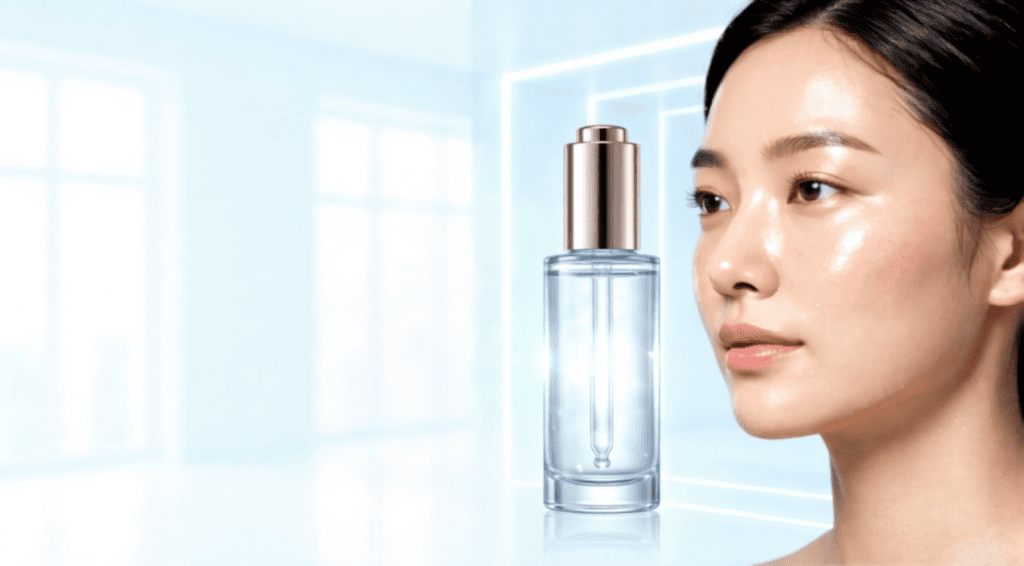
If you’ve scrolled through skincare TikTok even once this year, you’ve probably seen someone breathlessly explain that exosomes are “the next retinol.” Serums with the word plastered across the label are selling out. Med spas have added “exosome facials” to their menus next to Botox and microneedling. And your favorite dermatologist on Instagram has probably posted about them at least three times this month.
So what actually are these things, and is the hype backed by anything real? Let’s break it down without the marketing gloss.
What Are Exosomes, Exactly?
Exosomes are tiny particles released by cells, so small they’re measured in nanometers. Think of them as little envelopes that cells use to send messages to each other. Inside those envelopes are signaling molecules like proteins, lipids, and RNA fragments that cells use to communicate.
In skincare terms, the idea is that when you apply exosomes topically, they signal nearby skin cells to behave differently, prompting repair, calming inflammation, or supporting collagen production, rather than sitting on top of the skin the way a moisturizer or antioxidant serum does. That’s the pitch: a messenger that works at a level traditional active ingredients can’t reach.
Researchers didn’t discover exosomes because of skincare. Scientists have been studying their role in wound healing, immune signaling, and tissue communication for years, mostly in medical contexts that have nothing to do with anti-aging serums. Skincare brands picked up the science later and ran with it.
Why Is Everyone Talking About Exosomes Right Now?
A few things collided at once. Exosomes have been featured prominently in major publications and named a top trend by beauty industry outlets, moving quickly from a research topic into mainstream conversation. Med spas found a new premium treatment to offer alongside injectables. And beauty brands found a scientific-sounding word that photographs well on packaging.
There’s also a real shift in what people want from their skincare. Patients in 2026 are increasingly wary of treatments that feel aggressive or artificial, and they want results that build gradually without much downtime. Exosomes fit that mood perfectly: less “instant transformation,” more “your skin, but calmer and more resilient.”
Where Are Exosomes Used in Skincare?
You’ll find exosomes showing up in three main places right now:
In-clinic treatments. Dermatologists and med spas are pairing exosome solutions with microneedling or post-procedure recovery, using them to speed up healing after more intense treatments. The strongest results still tend to come from these clinician-administered protocols rather than at-home products.
Hair restoration. Exosomes derived from placental or platelet sources have made their way into scalp treatments aimed at stimulating hair follicles and slowing hair loss, often used alongside other scalp actives.
Consumer serums and boosters. This is the fastest-growing category, and also the one that deserves the most scrutiny. Plant-derived exosome serums are now sold direct-to-consumer with claims about renewal and glow, no clinic visit required.
The Science Is Real, But the Marketing Has Run Ahead of It
This is the part worth slowing down for. The underlying biology of exosomes is legitimate and actively studied. Research suggests exosomes can deliver proteins, lipids, and nucleic acids to target cells and may support collagen formation, tissue regeneration, and anti-inflammatory effects.
But there’s a meaningful gap between what’s been shown in controlled research settings and what a bottle of serum on a shelf can actually deliver. Several dermatology-focused outlets have pushed back on the more dramatic claims circulating online. Some formulations may offer soothing and hydration support, but many anti-aging claims currently being marketed are overstated and, in places, biologically misleading.
That distinction matters because not all exosome products are created equal. Plant-derived exosomes in a $60 serum are not the same thing as human cell-derived exosomes used in a supervised clinical protocol, and the two shouldn’t be judged by the same standard.
Are Exosomes FDA-Approved?
No, and this is the single most important thing to know before spending money on exosome treatments. There are zero FDA-approved exosome products on the market as of 2026. That applies across the board, including products marketed for aesthetic or hair restoration use.
The FDA has been actively enforcing against this category for years. By late 2023 the agency had issued six warning letters to exosome manufacturers, and enforcement continued through 2024 and 2025 against multiple companies for marketing unapproved drugs and unlicensed biological products. Warning letters have repeatedly cited manufacturing violations, including failure to validate sterility, and the agency has flagged illegal marketing of exosome products for treating conditions ranging from joint pain to anti-aging.
The safety concerns aren’t hypothetical. The FDA has warned of serious patient harm linked to unapproved exosome products, including severe infections, allergic reactions, and tumor formation. The agency continues to warn consumers against unapproved products derived from human cells or tissue that haven’t been reviewed for quality, safety, purity, or potency.
It’s worth separating this out clearly, because the risk profile is very different depending on the product type:
| Product Type | Regulatory Status | Relative Risk |
|---|---|---|
| Human/placental-derived exosome injections at unlicensed clinics | Not FDA-approved; actively targeted by enforcement | High — linked to reported infections and adverse reactions |
| Clinical trials using exosomes (cardiovascular, wound healing, etc.) | Operating under FDA IND clearance | Lower — supervised, monitored settings |
| Plant-derived exosome serums sold as cosmetics | Regulated as cosmetics, not drugs, if no medical claims are made | Lower risk of serious harm, but efficacy claims are often unproven |
| In-clinic exosome facials paired with microneedling | Varies by provider and product source | Depends heavily on clinic compliance and product sourcing |
Do Exosome Skincare Products Actually Work?
The honest answer is: it depends heavily on which product and which claim you’re talking about.
For a topical serum, don’t expect the same effect as an in-clinic biologic treatment. At-home exosome products are cosmetics, not drugs, which means they’re legally limited in what they can claim and, biologically, in what they can penetrate and do. The most credible view right now treats exosomes as recovery accelerators rather than overnight anti-aging solutions, useful for calming skin after a peel or in-office procedure rather than reversing years of sun damage on their own.
If you’re using an exosome serum as a soothing, barrier-supporting addition to your routine after a facial or in-office treatment, that’s a reasonable, low-risk way to try the trend. If you’re expecting it to replace retinoids or sunscreen, it won’t.
Who Should Consider Exosome Treatments
- People recovering from microneedling, peels, or laser treatments who want extra support during healing
- Those with a compromised or sensitive skin barrier looking for calming, hydrating formulas
- Anyone curious about the trend who wants to start with a low-risk, cosmetic-grade serum rather than an injectable
Who Should Skip Them For Now
- Anyone considering exosome injections at a clinic that can’t clearly explain where their product is sourced from and whether it’s part of an FDA-cleared trial
- People expecting dramatic, clinic-level anti-aging results from an over-the-counter serum
- Anyone with a history of allergic reactions to biologic or cell-derived products, without a dermatologist’s guidance first
How to Shop for Exosome Skincare Safely
- Stick to cosmetic-grade, topical products rather than injectable treatments unless you’re working with a licensed provider you trust.
- Ask what the exosomes are derived from. Plant-derived formulas carry a different risk profile than human cell-derived products.
- Be skeptical of dramatic claims. Words like “reverses aging” or “regenerates tissue” on a cosmetic product are a red flag, not a selling point.
- If considering an in-clinic treatment, ask directly about FDA status and sourcing. A provider who can’t answer clearly is a sign to walk away.
- Pair it with the basics. Exosomes work best as a support product alongside sunscreen, a gentle cleanser, and proven actives like vitamin C or retinoids, not as a replacement for them.
Exosomes vs. Peptides vs. Growth Factors: What’s the Difference?
It’s easy to lump these together since they all get marketed as “cellular communication” ingredients, but they work differently.
| Ingredient | What It Does | Best For |
|---|---|---|
| Exosomes | Deliver signaling molecules between cells | Post-procedure recovery, barrier support |
| Peptides | Short chains of amino acids that signal specific skin functions like collagen production | General anti-aging, firmness |
| Growth factors | Proteins that stimulate cell growth and repair | Wound healing, texture improvement |
None of these are interchangeable, and a routine built around one doesn’t necessarily need the other two.
The Bottom Line
Exosomes are a genuinely interesting area of biology that skincare marketing has run well ahead of. The research is real, the enthusiasm from dermatologists is real, and the recovery benefits after in-clinic procedures appear to have some evidence behind them. What isn’t real, at least not yet, is FDA approval for any exosome product, medical or cosmetic, which means due diligence is non-negotiable before you spend money on this trend, especially for anything injectable.
If you want to experiment, start with a topical, cosmetic-grade product from a brand that’s transparent about sourcing, and treat it as a supporting player in your routine rather than the star.
Frequently Asked Questions
Are exosomes safe for skin?
Cosmetic-grade topical exosome products are generally considered lower risk, but injectable exosome treatments are not FDA-approved, and the agency has linked unapproved products to serious adverse events including infections and allergic reactions.
What’s the difference between exosomes and stem cells?
Exosomes are particles released by cells, not living cells themselves. They carry signaling molecules but don’t replicate or grow the way stem cells do, which is part of why some consider them a lower-risk alternative to stem cell therapy.
Can I use exosome serum every day?
Most topical exosome products are formulated for regular use, similar to a serum or booster, but always follow the specific brand’s instructions since formulations vary widely.
Do exosomes help with hair loss?
Some scalp treatments use exosomes to stimulate follicles alongside other actives like biotin, and early results from clinics are promising, though it’s still an emerging, unregulated category rather than a proven cure.
Is an exosome facial worth the cost?
It depends on the provider and product source. If paired with microneedling for post-procedure recovery from a licensed provider using traceable products, some patients find it worthwhile. As a standalone anti-aging miracle treatment, the evidence doesn’t yet support the price tag many clinics charge.
Final Thought
Honestly, exosomes ka hype samajh aata hai, science genuinely interesting hai aur dermatologists bhi iske baare mein excited hain. Lekin jitni recovery aur “regeneration” ki baatein Instagram par ho rahi hain, utna solid proof abhi market mein available nahi hai, especially injectables ke case mein. Agar try karna hai to safe route lo: koi acha cosmetic-grade topical serum pick karo, expectations realistic rakho, aur agar clinic treatment consider kar rahi ho to seedha unse FDA status aur sourcing puchne mein hesitate mat karo. Trend follow karna theek hai, bas apni skin aur paise dono ka khayal rakh ke.