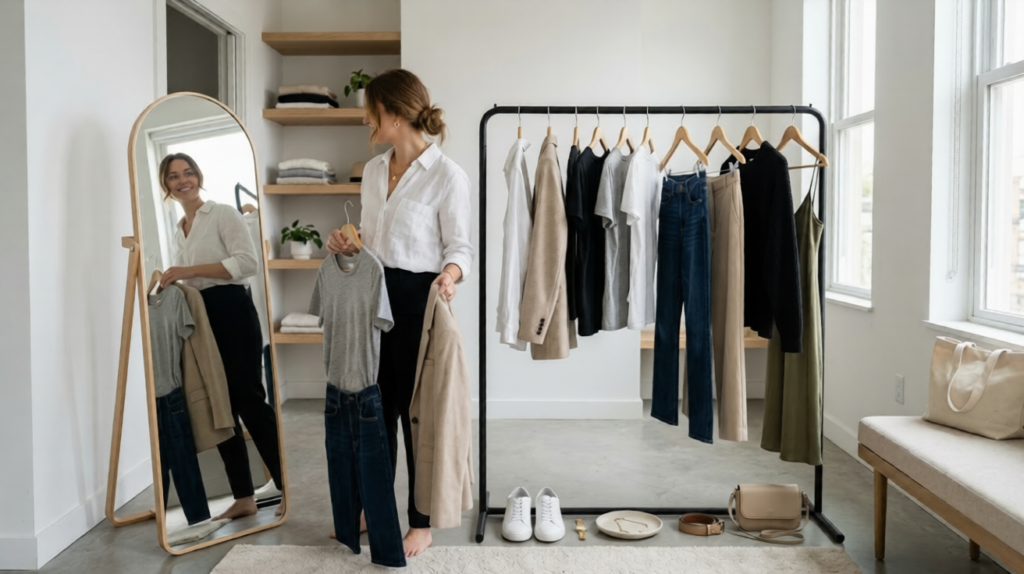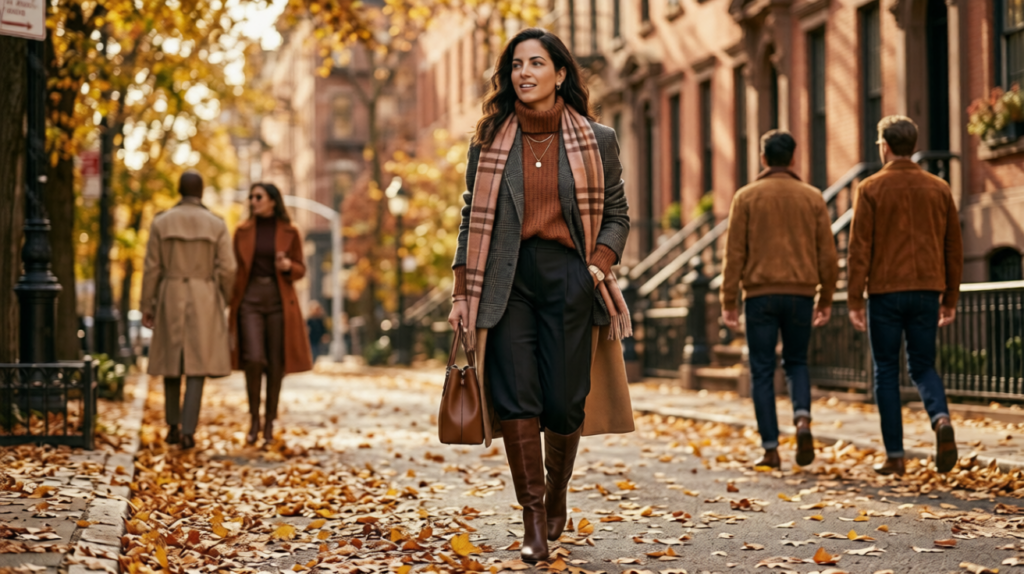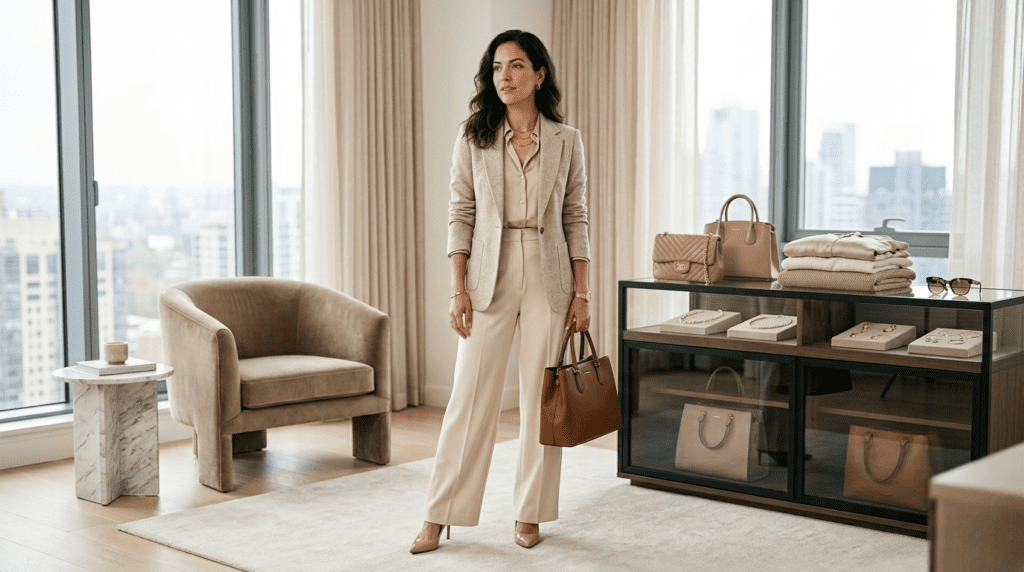
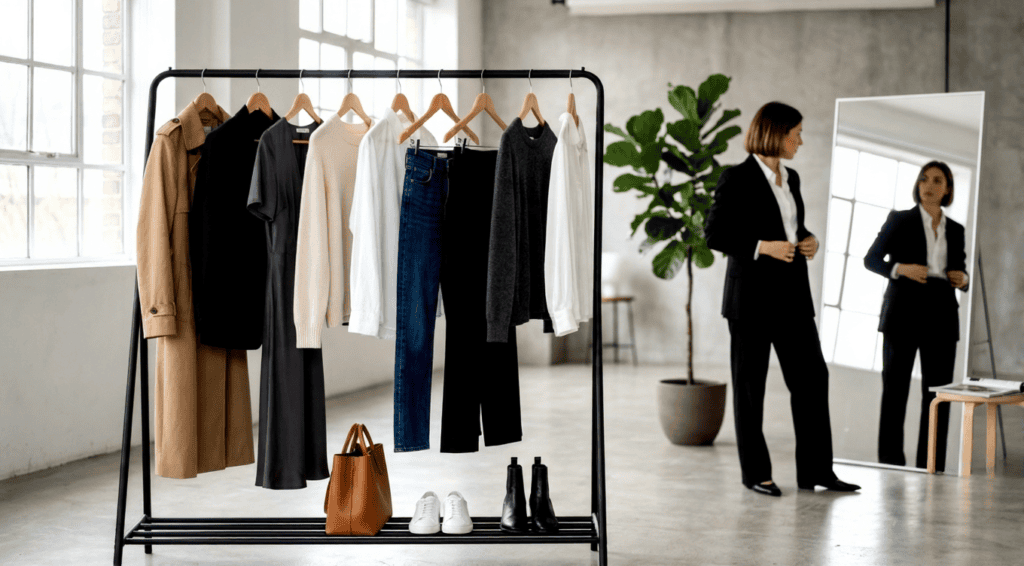
A closet full of clothes and nothing to wear isn’t a shopping problem. It’s a structure problem. Most wardrobes are built one impulse buy at a time, which is exactly why so few pieces actually talk to each other.
A 10-piece capsule wardrobe fixes that by design. You pick a small, deliberate set of clothing that shares a color story and a purpose, and every item earns its place by working with at least three or four others. Ten pieces sounds restrictive until you realize it can produce well over twenty outfits without repeating a single combination twice.
This guide walks through exactly which ten pieces to choose for 2026, why the color palette matters more than the item list, and how to actually wear the thing once you’ve built it.
What Counts as a “Piece” in a Capsule Wardrobe
Before picking anything, it helps to agree on what’s included. A 10-piece capsule usually refers to core clothing items only: tops, bottoms, dresses, and outerwear. Shoes, bags, and jewelry are typically counted separately, since accessories do the heavy lifting of making the same ten items look different from week to week.
That distinction matters because it keeps the core capsule genuinely small. If shoes and bags got folded into the count, you’d be forced to cut real clothing options just to fit in footwear, which defeats the point of a focused wardrobe.
Why 2026 Is a Good Year to Build One
Fashion cycles have been moving fast for years, but the current mood is pulling in the opposite direction. Rather than chasing whatever’s trending on a feed, deep navy has become the single most versatile anchor color for both men and women building a refined wardrobe this year, and warm neutrals have taken over from the flatter black-white-beige combination that used to define “safe” dressing.
That shift actually makes capsule building easier. Fashion in 2026 has leaned into olive, burgundy, and earthy shades as the new neutrals, adding depth and versatility beyond the classic black, white, and beige combination. These tones photograph well, layer easily, and don’t scream “trend” the way a bright color does, which means your ten pieces will still look current well past this season.
The Color Rule That Makes or Breaks a Capsule
This is the part most people skip, and it’s the reason so many capsule wardrobes fail within a month. The clothes aren’t the foundation. The color palette is.
Style experts consistently recommend keeping a capsule to three or four core colors rather than chasing individual pieces in whatever shade looks good on a hanger. Building around a tight palette is what allows a top from one week to pair with a bottom you bought for an entirely different outfit.
For 2026, a reliable palette looks like this:
- A deep neutral anchor: navy, chocolate brown, or charcoal
- A warm mid-tone: camel, cognac, or oatmeal
- A soft light shade: ivory, cream, or the milky off-white currently popular across fashion and interiors
- One accent color: olive, burgundy, or a muted sage
Four colors, one wardrobe, dozens of combinations. Stray outside that palette and you’ll end up with pieces that photograph beautifully on their own and sit untouched in your closet.
The 10 Pieces to Build Around
1. A Structured White or Ivory Shirt
This is your reset button. It works tucked into trousers for the office, knotted over a swimsuit, or layered under a sweater when it’s cold. Cotton poplin holds its shape best; avoid anything too sheer if you want it to double as outerwear on warmer days.
2. A Crisp White or Cream T-Shirt
Different from the shirt above in one key way: it’s built for layering, not standalone polish. A slightly heavier cotton jersey holds its shape under blazers and cardigans far better than a thin basic tee.
3. Dark, Straight-Leg Denim
Skinny and ultra-baggy silhouettes will keep having moments, but a straight-leg cut in a dark, non-distressed wash remains the version that works across the most occasions, from casual weekends to smart-casual dinners.
4. Tailored Trousers in Your Anchor Neutral
Pick a color you’ll wear most often, ideally navy or a rich chocolate brown, and choose a straight or slightly wide leg. These trousers are what let one blazer or knit do office duty and evening duty in the same week.
5. A Long Wool or Wool-Blend Coat
A well-made coat is arguably the single highest-leverage piece in any capsule, since it sits over nearly every other outfit and instantly upgrades it. A double-faced wool coat in camel, chocolate, or navy is warm enough for real winter and elegant enough to wear over a simple tee.
6. Neutral Knitwear (One Sweater, One Cardigan)
If you can only pick one knit, choose a lightweight crewneck or turtleneck in oatmeal or cream. If your budget allows a second piece, add an open cardigan in the same tone family. Cardigans layer over t-shirts on cool mornings and over dresses on chilly evenings, which makes them one of the hardest-working items on this list.
7. A Slip or Wrap Dress in a Neutral Tone
One dress earns its spot only if it can be dressed up or down. A midi-length slip or wrap dress in navy, chocolate, or ivory works layered under a coat in winter, worn alone in summer, and dressed up with the right accessories for evenings.
8. A Black or Chocolate Blazer
Chocolate brown has been steadily replacing black as the “sharp neutral” of choice for 2026, and it pairs more easily with the warm palette above. Either color works as long as it’s structured enough to instantly formalize jeans or a t-shirt.
9. Minimal Leather Sneakers
Choose white, cream, or a warm tan pair with as little branding or hardware as possible. Minimal sneakers are the piece that keeps a capsule from feeling like “workwear only,” letting the same trousers and blazer combination read as relaxed rather than corporate.
10. Ankle Boots or Chelsea Boots in Tobacco or Chocolate Leather
Genuine leather Chelsea boots in tobacco brown are one of the most efficient ways to introduce warmth into an existing wardrobe without rebuilding it, since they pair with navy, grey, camel, ivory, and olive trousers without exception. They’re the shoe that carries a capsule from early autumn through the coldest months.
How These 10 Pieces Combine
| Occasion | Outfit Formula |
|---|---|
| Office, polished | Tailored trousers + white shirt + blazer + Chelsea boots |
| Office, relaxed | Dark denim + cream tee + cardigan + minimal sneakers |
| Weekend errands | Dark denim + white tee + coat + sneakers |
| Dinner out | Slip dress + blazer + ankle boots |
| Cold-weather layering | Trousers + knit sweater + coat + Chelsea boots |
| Warm-weather day | Slip dress alone + sneakers |
Six formulas from ten pieces, and that’s before mixing in any accessories. Add a woven tote, a pendant necklace, or a single statement bag, and the combinations roughly double again.
Common Mistakes That Sink a Capsule Wardrobe
Buying the whole thing overnight. Building a full capsule in one shopping trip usually means settling for close-enough colors that don’t actually match your palette. Buy the anchor coat and trousers first, then fill in gaps over a few weeks.
Ignoring your actual routine. A capsule built around blazers and trousers won’t serve someone who works from home or moves through an active day. Swap in tailored knits and elevated sneakers if that’s closer to your reality.
Chasing trend pieces instead of longevity. Fun seasonal items can absolutely join the rotation later, but the ten core pieces should be chosen for how long they’ll last, not how they look in a single season’s lookbook.
Skipping fit for the sake of speed. A capsule wardrobe only works if every piece fits well. A slightly ill-fitting blazer or a coat that’s too long will get worn less than the rest of your rotation, defeating the purpose of building it in the first place.
Building It on a Budget
You don’t need designer labels to make this work. Focus your budget on the coat and the trousers first, since those two pieces appear in the most outfit formulas above. The t-shirt, jeans, and sneakers are the easiest to find well-made and affordable, since fit and fabric weight matter more than brand name for those categories.
If you’re shopping secondhand, cream, ivory, and chocolate brown are consistently easy to find in resale shops, since they’ve been wardrobe staples for years rather than a single season’s trend.
FAQs
Is a 10-piece capsule wardrobe realistic for everyday life?
Yes, as long as accessories, shoes, and outerwear are counted separately from the core ten items. Most people combine those ten pieces with two or three pairs of shoes and a handful of accessories to create real variety.
How many outfits can you actually get from 10 pieces?
With a tight color palette, ten pieces typically produce 15 to 25 distinct outfit combinations, and that number grows further once shoes, bags, and jewelry are added into the mix.
Should a capsule wardrobe change every season?
The core pieces, like the coat, trousers, and blazer, can stay the same year-round. Only the lighter layering pieces, such as the t-shirt or dress, usually need seasonal swaps for warmer or colder weather.
What’s the biggest mistake people make when starting a capsule wardrobe?
Buying pieces in mismatched colors is the most common issue. Sticking to three or four core colors is what allows every item to combine with several others instead of just one or two.
Do capsule wardrobes work for men too?
The same principles apply directly. A tight neutral palette, one strong coat, tailored trousers, and versatile leather footwear form the backbone of most men’s capsule wardrobes as well.
Final Thought
A capsule wardrobe isn’t about owning less for the sake of it. It’s about owning on purpose. Ten well-chosen pieces in a color palette that actually works together will get you dressed faster, look more put-together, and save you from the closet-full-of-nothing-to-wear feeling that oversized wardrobes create in the first place. Start with the coat and the trousers, build outward from there, and let the rest of your closet catch up over time.