Glass skin used to mean one thing: a face so dewy and reflective it looked filtered even without a filter. That version of the trend hasn’t disappeared, but it has grown up. Walk into an Olive Young in Seoul today and you’ll notice something different from three years ago — fewer ten-step routines, more shelves dedicated to a handful of ingredients doing serious work. PDRN. Peptides. Ceramides. The philosophy is the same as it always was, but the execution is smarter.
If you’ve tried to chase glass skin before and ended up with irritated, over-exfoliated skin instead of a glow, this guide is for you. Here’s what actually works in 2026, step by step, without the overwhelm.
What Is Glass Skin, Really
Glass skin describes a complexion so hydrated and smooth that it reflects light evenly, almost like polished glass. It’s not about coverage or contouring. It’s about the skin itself looking clear, plump, and healthy enough that makeup becomes optional rather than necessary.
The idea took off globally around 2018, but Korean skincare has built its foundation around this same principle for decades: hydration first, gentle exfoliation, and a barrier that’s strong enough to hold onto that moisture. What’s changed in 2026 is the honesty around it. Fewer brands are selling the fantasy of poreless perfection. More are talking about visible pores, occasional texture, and the odd blemish as part of skin that’s still healthy — just real.
Why Glass Skin Looks Different in 2026
The biggest shift is the move away from piling on product. Dermatologists and Korean beauty editors have been pushing back on the old ten-step routine, and the industry has responded with what’s being called “skinimalism” — three to five high-performing steps instead of ten mediocre ones.
A few things are driving this:
- Barrier damage backlash. Years of layering acids, retinol, and vitamin C in the same routine left a lot of people with reactive, sensitized skin. The correction is now baked into how routines are built.
- Multi-tasking formulas. Serum sunscreens, cream-toner hybrids, and treatment essences mean you can hit hydration, protection, and repair in fewer steps.
- Ingredient transparency. Buyers want to know exactly what’s in the bottle and why, not just that it’s trending on TikTok.
South Korea’s cosmetics exports hit a record $11.43 billion in 2025, up 12.3 percent from the year before, and the country overtook France as the top cosmetics exporter to the US. That scale has pushed Korean formulation science further, and PDRN is the clearest example of where it’s headed — an ingredient that started as a clinical wound-healing treatment and is now sitting on drugstore shelves as an at-home serum.
The 2026 Glass Skin Routine: Step by Step
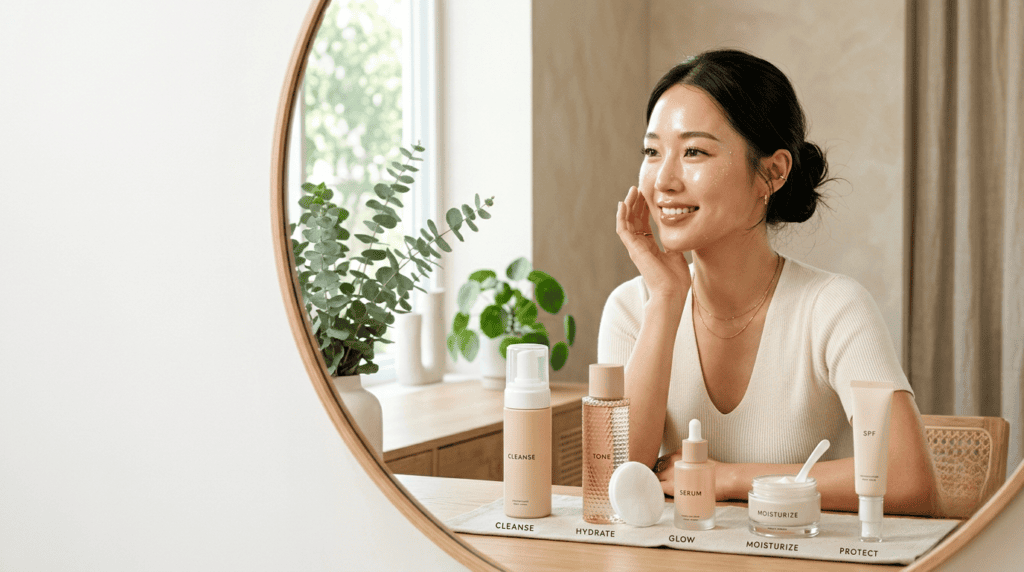
You don’t need ten products. You need the right five to seven, used consistently.
1. Double Cleanse (Evenings Only)
Start with an oil-based cleanser to break down sunscreen, makeup, and the day’s buildup, then follow with a gentle water-based cleanser. This two-step method removes residue without stripping your skin the way a single harsh cleanser can. In the morning, a water-based cleanser alone is usually enough since you’re not removing a full day of product.
2. Hydrating Toner
Korean toners aren’t astringents. They’re the first hydration layer, meant to rebalance your skin’s pH and prep it to absorb everything that comes next. Toner pads have largely replaced liquid toners for convenience, but the function is the same — pat, don’t rub, and let it sink in before moving on.
3. Exfoliate (2–3 Times a Week, Not Daily)
Dead skin cells scatter light, which is exactly what glass skin is trying to avoid. Chemical exfoliants — AHAs for tone and texture, BHA for pores — are gentler and more precise than physical scrubs, and Korean routines favor them for that reason. Apply on clean, dry skin, and resist the urge to do this daily. Over-exfoliating is the fastest way to undo everything else in your routine.
4. Treatment Serum or Essence
This is where 2026’s star ingredients come in. PDRN (polydeoxyribonucleotide), derived from purified salmon or trout DNA, has become the ingredient of the year for a reason: it works by calming inflammation and signaling skin cells to repair themselves, rather than exfoliating or resurfacing. That makes it gentler than retinol while still delivering visible improvements in firmness and texture over four to eight weeks of consistent use. Concentrations vary widely, from around 30,000 ppm in entry-level formulas up to 300,000 ppm in stronger ampoules, so check the label if potency matters to you.
If PDRN doesn’t fit your budget or preferences, snail mucin and peptide serums remain solid, well-studied alternatives for hydration and barrier support.
5. Moisturizer
This is the step that seals everything in. Look for ceramides if your skin leans dry or barrier-compromised, or a lighter gel-cream if you’re oily or live somewhere humid. The goal is a moisturizer that locks in hydration without leaving a heavy film.
6. SPF (Non-Negotiable)
Skip this step and nothing else matters. UV exposure breaks down collagen, enlarges pores, and causes the hyperpigmentation that ruins an even, glass-like finish. Korean sunscreen formulation has genuinely closed the gap between protection and comfort — modern “serum sunscreens” are lightweight, leave no white cast, and often double as a primer, which is part of why Korean women reliably wear SPF daily while so many people elsewhere skip it.
7. Weekly Extras
A hydrating sleep mask once or twice a week gives your barrier extra support overnight. This isn’t a daily step, but it’s a useful one when your skin looks tired or dull.
Skin Type Adjustments
Glass skin isn’t one-size-fits-all, and the routine above should flex depending on your skin.
Oily or acne-prone: Skip heavier facial oils in the cleansing step and use a lightweight gel cleanser instead. Lean on BHA for the exfoliation step to keep pores clear, and choose a gel-based moisturizer over a rich cream.
Dry or sensitive: Favor ceramide-heavy moisturizers and go easier on exfoliation — twice a week is plenty. PDRN and snail mucin are both good picks here since they support the barrier instead of stressing it.
Combination: Treat your T-zone and cheeks differently if needed. A gel moisturizer on oilier areas and a richer one on drier patches isn’t overcomplicating things, it’s just accurate.
Humid climates: A full glass skin routine can feel greasy in high humidity. This is where the “cloud skin” variation comes in — a softer, more matte finish that still keeps a bit of radiance on the high points of the face, like cheekbones, rather than an all-over dewy sheen.
Common Mistakes That Ruin Glass Skin
- Stacking too many actives. Retinol, vitamin C, AHA, and BHA all in one routine will compromise your barrier faster than any single ingredient can repair it. Pick one or two actives and rotate rather than layering everything at once.
- Skipping SPF because it feels heavy. Modern serum sunscreens solve this. There’s no good reason left to skip this step.
- Chasing shine instead of health. If your skin looks plastic-like and tight rather than soft and glowing, that’s a sign to scale back and focus on barrier repair, not push harder.
- Expecting overnight results. Most of these ingredients, PDRN included, need four to eight weeks of consistent use before changes are visible.
Comparison: Building Your Glass Skin Routine by Budget
| Step | Budget-Friendly Option | Mid-Range Option | Premium Option |
|---|---|---|---|
| Cleanser | Water-based gel cleanser | Oil + water double cleanse set | Fermented-ingredient oil cleanser |
| Toner | Basic hydrating toner | Pre-soaked toner pads | Treatment essence with actives |
| Exfoliant | Drugstore BHA liquid | Korean AHA/BHA toner | Prescription-adjacent peel pads |
| Treatment | Niacinamide serum | Entry-level PDRN serum (~30,000 ppm) | High-concentration PDRN ampoule (200,000+ ppm) |
| Moisturizer | Basic ceramide cream | Ceramide-ampoule hybrid | Barrier-repair sleeping mask cream |
| SPF | Standard SPF 30–50 lotion | Lightweight serum sunscreen | Hybrid SPF with skin-conditioning actives |
Whichever tier you land on, consistency across all six steps matters far more than splurging on one expensive product while skipping the basics.
Who Should Try Glass Skin, and Who Should Adjust the Approach
This routine works well for most skin types with the modifications above. If you have very reactive skin, rosacea, or a history of eczema, introduce one new product at a time and give it two to three weeks before judging results. If you’re pregnant or breastfeeding, check with your doctor before adding PDRN or retinol-containing products, since ingredient safety data during pregnancy is still limited for some of these newer actives.
Final Verdict
Glass skin in 2026 isn’t about more steps or more money. It’s about hydration, gentle exfoliation, and a small set of well-chosen ingredients used consistently over weeks, not days. PDRN is the ingredient worth paying attention to this year, but it’s not magic on its own — it works because it’s part of a routine that also protects the barrier with SPF and doesn’t overload the skin with actives. Start simple, add one step at a time, and give it the four to eight weeks your skin actually needs to show a difference.
Frequently Asked Questions
Is the traditional 10-step Korean skincare routine still necessary in 2026?
No. The current trend has shifted toward “skinimalism,” using three to five high-performing steps instead of ten. Multi-functional products like serum sunscreens and cream-toner hybrids make this simpler routine just as effective.
Can oily skin achieve glass skin?
Yes. Use oil-free humectants, gentle exfoliants, and lightweight gel moisturizers instead of heavy creams. Layering watery essences works better for oily skin than rich, occlusive products.
What’s the difference between PDRN and retinol?
PDRN repairs and regenerates skin through anti-inflammatory signaling, while retinol renews skin by speeding up cell turnover. PDRN tends to be gentler and better suited to sensitive or barrier-compromised skin.
How long does it take to see glass skin results?
Most people notice visible changes in texture and glow after four to eight weeks of consistent use, provided the routine includes proper hydration, gentle exfoliation, and daily SPF.
Is glass skin achievable for all skin types?
Yes, with adjustments. Dry skin benefits from ceramide-rich moisturizers and less frequent exfoliation, while oily and combination skin do better with gel textures and BHA-focused exfoliants.
Final Thought:
Achieving Korean glass skin in 2026 isn’t about chasing perfection—it’s about building healthy, well-hydrated skin through consistency and the right skincare routine. By understanding your skin’s needs, choosing effective products, and staying patient, you can achieve a naturally radiant, smooth, and glowing complexion that lasts.