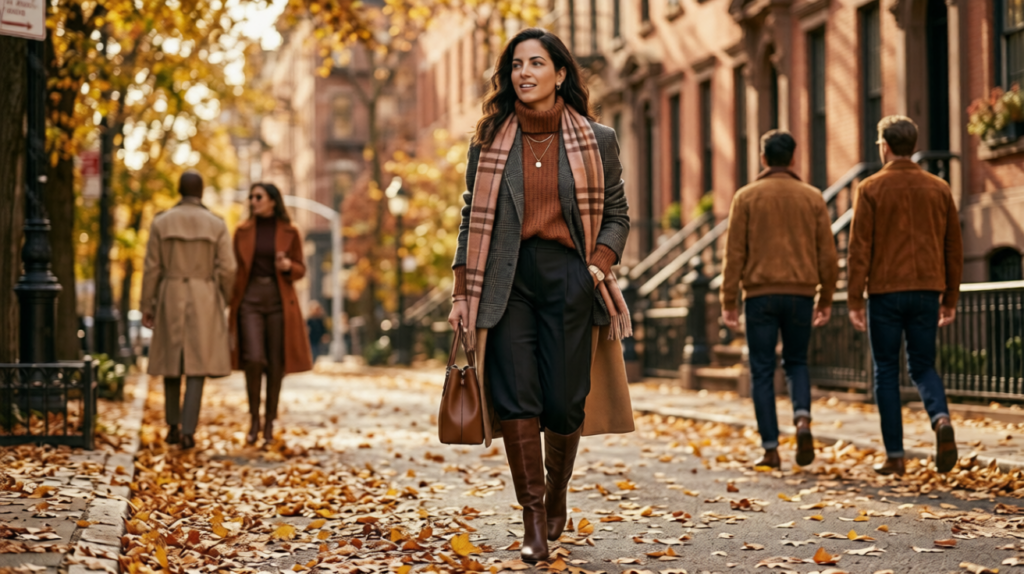
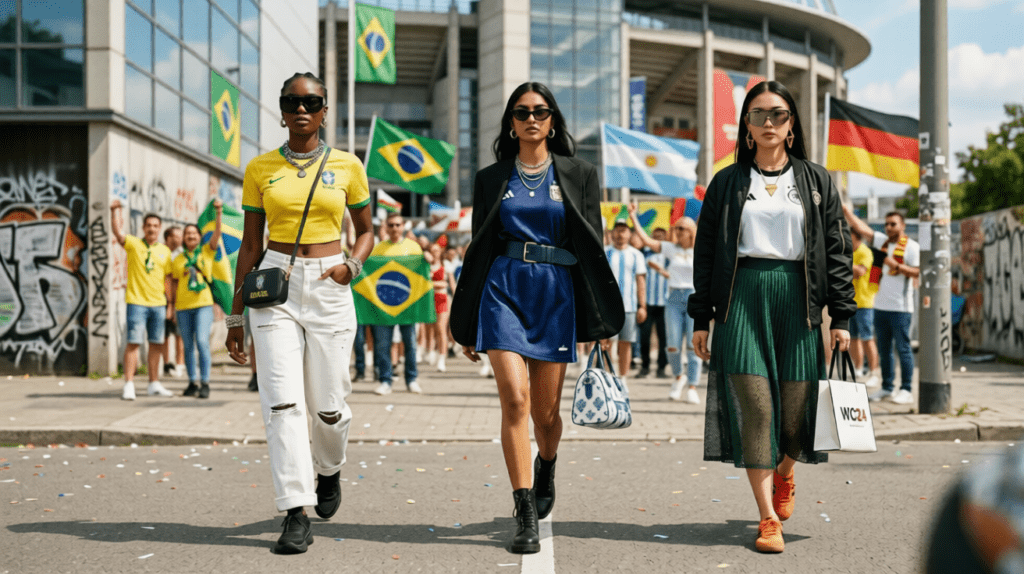
Something shifted this summer. Walk through any major US city right now and you will see football jerseys everywhere. Not just on game day. Not just in sports bars. On the street, tucked into wide-leg trousers. Layered under blazers at rooftop parties. Worn with heels and a clutch at dinner. Styled with linen shorts and slides at the farmer’s market.
The World Cup jersey has officially left the stadium and it is not coming back.
This is not a casual sports crossover moment. What is happening right now is a full-blown fashion movement, and it has been building for years. The 2026 FIFA World Cup, hosted across the United States, Canada, and Mexico, has put football culture directly in front of one of the most style-conscious audiences in the world. And the fashion industry noticed well before the opening match kicked off.
This is the story of how the football kit became a high-fashion staple, why it happened now, and how people are actually wearing it.
It Started Long Before the World Cup
To understand why jerseys are dominating fashion right now, you have to go back further than 2026. The groundwork for this moment was laid over the better part of a decade.
Streetwear culture deserves a lot of the credit. When Supreme, Palace, and later Fear of God started pulling from athletic and sports references in the mid 2010s, they blurred the line between performance wear and fashion in a way that had never quite happened before. Sportswear stopped being something you changed into and out of. It became something you built an outfit around.
Football specifically started getting serious fashion attention around 2018. The World Cup in Russia that year produced some genuinely striking kit designs, and people outside the football world started paying attention to them as graphic objects, as wearable art, not just as team uniforms. Balenciaga started putting models in jerseys on runways. Vetements released football-inspired collections. Designers started citing stadium culture as a reference point.
By 2022, the Qatar World Cup had become a legitimate fashion moment. Street style photographers outside the stadiums were shooting looks just as actively as they were shooting the fans inside. That was the turning point. Football style went from a niche subcultural interest to something the broader fashion world could not ignore.
Then the 2026 World Cup landed on American soil, and everything accelerated.
Why the US Market Changed Everything
America has always had its own complicated relationship with football. Soccer, as it is called here, spent decades being treated as a fringe sport in a country obsessed with the NFL, NBA, and MLB. But that narrative has quietly and then very loudly changed.
MLS has grown into a genuinely popular league. NYSCI and Angel City FC have built passionate fanbases. The USMNT and USWNT have become cultural touchstones for younger Americans in a way that previous generations of soccer fans could only dream about. And then Lionel Messi joined Inter Miami in 2023, which did more for American soccer culture than perhaps any single event in the sport’s US history.
By the time the 2026 World Cup arrived, the American fashion consumer was primed. Young people here already had jerseys in their closets, not necessarily as sports gear but as style pieces. Messi’s Inter Miami pink kit had already been spotted on celebrities and in fashion editorial shoots. The jersey had already made its case as a fashion object. The World Cup simply gave it the biggest possible stage.
Fashion brands read the room early. Collaborations between kit manufacturers and luxury houses started appearing well before the tournament began. Limited edition jerseys sold out in minutes, not because fans wanted to wear them to matches, but because collectors and style enthusiasts wanted them as pieces.
The Kits That Became Cultural Moments
Not every kit gets elevated to fashion status. The ones that cross over tend to share certain qualities. Strong graphic design, unexpected color choices, references that resonate beyond the sport itself.
Here are some of the kits from the 2026 cycle that genuinely captured the fashion world’s attention.
The USMNT Away Kit The US men’s away kit for 2026 leaned into American iconography in a way that felt confident rather than clichéd. The design team pulled from retro Americana graphics, and the result was a jersey that read as much as a piece of graphic design as it did a football uniform. It sold out almost immediately after launch and was spotted in street style coverage at New York Fashion Week before the tournament had even started.
Morocco’s Home Kit Morocco’s kit became one of the most talked-about designs of the entire tournament. The deep red paired with intricate geometric patterning drawn from traditional Moroccan tile work was extraordinary. It looked as good hanging on a wall as it did on the pitch. Searches for the kit spiked internationally within hours of it being unveiled, and resale prices reflected that demand immediately.
Brazil’s Third Kit Brazil released a limited edition third kit for 2026 that abandoned their signature yellow and green in favor of an unexpected deep navy and gold colorway. The backlash from traditionalists was immediate, and so was the fashion community’s embrace of it. It became the most sought-after jersey of the summer specifically because it felt like a design risk.
Japan’s Home Kit Japan has consistently produced some of the most visually striking football kits in the world, and their 2026 home kit continued that tradition. The design incorporated traditional Japanese textile patterns in a way that felt contemporary and deeply cultural at the same time. It was the kind of jersey that made people who had never watched a football match want to own one.
How the Fashion Industry Responded
The fashion industry’s response to the jersey moment has been both reactive and proactive, and it has played out across every level of the market.
At the luxury end, the crossover has been visible in runway collections and editorial campaigns. Brands that might previously have kept their distance from sportswear references have leaned in. Jerseys have appeared in lookbooks styled with tailored trousers, statement jewelry, and high-end footwear. The message from these brands is clear: the jersey is not a departure from fashion. It is fashion.
At the mid-market level, collaborations have been the dominant story. Kit manufacturers like Adidas, Nike, and Puma recognized the fashion opportunity and moved quickly. Nike’s partnership with Martine Rose produced a collection of reworked England kits that sold out globally. Adidas brought in Stella McCartney for a sustainability-focused line of jersey-inspired pieces that blurred the line between sportswear and ready-to-wear completely.
At the streetwear level, independent designers have been remixing vintage kits and producing their own football-inspired graphics. Thrift stores across the US have been cleaned out of vintage international jerseys. Depop and Grailed have seen jersey listings spike to a degree that mirrors what happened to vintage band tees a decade ago.
And then there is the celebrity effect, which has been enormous.
Celebrities Who Made the Jersey a Fashion Statement
Celebrity dressing has played a significant role in the jersey’s elevation from stadium wear to style staple. When high-profile people wear something in an intentional, styled way, it signals to a broader audience that this is an acceptable and even desirable thing to do.
Zendaya was spotted at a pre-World Cup event wearing a vintage France jersey tucked into a high-waisted black leather skirt with pointed-toe mules. The photos went everywhere instantly. It was the kind of outfit that made the jersey look like the most obvious, elegant choice rather than a casual afterthought.
Bad Bunny, who has been one of the most consistently interesting dressers in celebrity culture for the past few years, wore a reworked Puerto Rico kit on the cover of a major fashion magazine this spring. The styling was intentional and the image was striking.
Olivia Rodrigo wore a vintage USWNT jersey to a stadium concert, layered under a slip dress, in a combination that became one of the most screenshot-shared outfits of the early summer.
These moments matter because they give people permission and inspiration. When someone whose style is genuinely respected treats a jersey as a serious fashion piece, the rest of the culture follows.
How to Actually Style a Football Jersey
The jersey’s versatility is a big part of why it has worked so well as a fashion piece. It can be dressed up or down with very small adjustments, which makes it genuinely wearable across a wide range of contexts.
The Tucked-In and Tailored Look
This is the silhouette that has been most popular in street style coverage this summer. Take a jersey and half-tuck or full-tuck it into high-waisted wide-leg trousers. The contrast between the relaxed jersey and the structured trouser creates an interesting tension that feels very current. Finish with loafers or simple leather sandals and minimal jewelry. This works for both men and women and reads as intentional and put-together.
The Jersey Dress
Wear an oversized jersey as a dress. This works especially well with longer vintage kits that hit mid-thigh. Add a belt at the waist if you want structure, or leave it loose and unbelted for a more fluid silhouette. Platform sneakers or chunky sandals work well here. This look is effortless and genuinely stylish without requiring much thought.
The Layered Look
Layer a jersey over a long-sleeve fitted shirt or a turtleneck for a preppy-athletic hybrid that works well in early summer evenings when the temperature drops. This approach is also a good way to wear a jersey in a more conservative setting where the athletic reference needs to be softened slightly by the additional layer.
Jersey with Tailoring
One of the most striking ways to style a jersey is to treat it like a shirt and layer it under a structured blazer. Leave the blazer open, keep the jersey visible, and pair with straight-leg or wide-leg trousers. This combination is genuinely fashion-forward and works for events where you want to look polished but still express a point of view.
The Casual Summer Edit
For a more relaxed approach, pair a jersey with baggy linen shorts, tube socks, and retro sneakers. This is the most approachable iteration of the trend and the one that requires the least styling thought. It is summer, it is easy, and it looks great.
The Vintage Jersey Market is Exploding
One of the most interesting side effects of the jersey fashion moment is what it has done to the vintage and resale market. Vintage international football jerseys have become genuinely valuable collector’s items, with some rare 1990s and early 2000s kits selling for hundreds of dollars online.
The appeal of vintage jerseys for fashion-minded buyers is partly aesthetic. Older kits often have bolder graphic design, more interesting colorways, and a worn-in quality that new jerseys cannot replicate. They also carry a sense of history and specificity that feels meaningful in an era of fast fashion and mass production.
Key pieces that are currently fetching high prices in the resale market include early 2000s Nigeria kits in their distinctive green and white, 1990s Colombia kits with their bold graphic patterning, classic Italy Azzurri kits from major tournament years, and any Messi-era Argentina kits in good condition.
If you are shopping for vintage jerseys, Depop, Grailed, and specialized football kit resellers are the best places to look. eBay still has a large selection but requires more patience to find quality pieces at reasonable prices.
What This Means for Fashion Going Forward
The jersey moment is not going to disappear when the World Cup ends. Trends that are this deeply embedded in multiple levels of culture simultaneously, streetwear, luxury fashion, celebrity dressing, resale markets, tend to have staying power.
What is more likely is that the jersey becomes a permanent part of the fashion vocabulary in the way that other athletic pieces have before it. The bomber jacket started as military gear. The sneaker started as a court shoe. The tracksuit started as warm-up wear. All of them are now accepted, legitimate fashion pieces that appear in every market segment and every style context.
The football jersey is on that trajectory. The 2026 World Cup has accelerated it significantly, but the cultural conditions that made it possible have been building for years and are not going away.
Expect to see jersey-inspired silhouettes in more runway collections next season. Expect more luxury collaborations with kit manufacturers. Expect the vintage jersey market to keep growing. And expect to keep seeing jerseys on the street, tucked into skirts and trousers and layered under blazers, long after the final whistle of the tournament has blown.
Final Thoughts
There is something genuinely exciting about watching a piece of clothing cross over from one world into another. The football jersey has earned its place in fashion not because someone decided to make it trendy, but because the conditions were right and the design language of the best kits is legitimately compelling.
The 2026 World Cup gave the jersey its biggest platform yet, but the people wearing them on the streets of New York, Los Angeles, and Chicago are not wearing them because of the tournament. They are wearing them because they look good, they feel comfortable, and they say something about who you are and what you care about.
That is exactly what the best fashion has always done.